
You are currently browsing the category archive for the ‘Real Estate’ category.
Every year in the month of April, REALTORS® observe the anniversary of the passage of the Fair Housing Act of 1968 and use the time to educate consumers about housing discrimination and segregation, and to recommit to expanding equal access to housing. April this year has turned out to be different due to the COVID-19 outbreak, but NAR reminds members Fair Housing Month can be celebrated at home. Education, reflection, and discussion are meaningful efforts members can still undertake while practicing social distancing.
To mark the event, NAR is sharing curated lists of books, videos, podcasts and other resources for members to educate themselves throughout the month. NAR urges members to use this time to read, watch, listen, think, discuss and strengthen their fair housing knowledge and leadership with these tools.
As stewards of the right to own, use and transfer private property, REALTORS® reconfirm their commitment to upholding fair housing law and offering equal professional service to all in their search for real property. “Even amid the coronavirus pandemic, REALTORS® are using virtual tools to help homebuyers search for a home so they can achieve their dream of homeownership,” said Mary Kay Groth, president of the Silicon Valley Association of REALTORS® (SILVAR).
At the federal level, NAR is advocating for a federal minimum standard for remote online notary. NAR also worked on further tax extensions for 1031 like-kind exchanges and opportunity zones, and wants to make sure the much-needed forbearance measures do not unintentionally lock up the mortgage marketplace.
As a designated U.S. Census Bureau national partner for the 2020 Census, NAR is urging its 1.4 million REALTORS® nationwide to help drive Census participation in their respective communities. The good news is over 70 million households have responded to date, representing over 48 percent of all households in America (52% in California), using the Census Bureau’s new online option.
Roughly $1.5 trillion is allocated to states and localities annually based off census results to fund roads, public transportation, hospitals, schools and other infrastructure. More specifically, this year’s results will influence the allocation of $93.5 billion to Federal Direct Student Loans, $19.3 billion to Section 8 Housing Choice Vouchers and $12 billion to the National School Lunch Program.
Census data is also used to draw district lines to determine appropriate Congressional representation for the next decade. California is one of 10 states likely to lose a congressional seat since more people left California than moved in over the course of a year. If California loses a seat in Congress, the state’s number of seats in the U.S. House of Representatives will drop from 53 to 52 and it could cost the state billions of dollars in federal funds.
Groth urges those who have not to please respond to the Census. “If you are unable to respond online, a paper questionnaire can be mailed to you by calling toll free 1-844-330-2020. I assure you the Census Bureau will never ask for bank account or social security numbers, donations, or anything on behalf of a political party. Strict federal law protects the confidentiality of Census responses.”
Dear fellow REALTORS® and SILVAR members,
As I write this from my home office, I realize some of what I say could be old news by the time this is published, but I will press on.
As you know, Real Estate has been deemed an essential business during the COVID-19 crisis. The reaction to this has been mixed. Initially, REALTORS® felt this was a good thing, but it has caused confusion since we live in an area that is under the stricter rules mandated by the various County Health Departments.
The California Association of REALTORS® has been criticized for putting out conflicting information and guidelines, but it has been very clear, as has SILVAR, that our local rules are different, and we must adhere to them. No Open Houses … residential viewings must only occur virtually or, if a virtual viewing is not feasible, by appointment with no more than two visitors at a time residing within the same household or living unit and one individual showing the unit. In person visits are not allowed when the occupant is still residing in the residence.
Doesn’t that seem extreme, you say. Let’s consider what the ordinance says: The intent of this Order is to ensure that the maximum number of people shelter in their places of residence to the maximum extent feasible to slow the spread of COVID-19 and mitigate the impact on delivery of critical healthcare services to those in need.
When assessing if what your are doing for you and/or your clients, the above isn’t just a guideline; it is the law. Yes, transactions are being closed, movers are still moving (based on guidelines that allow this), but it is our responsibility as REALTORS® to be an example of following our Code of Ethics Preamble for “the preservation of a healthful environment.”
Since COVID-19 and its impact on us, I think it’s safe to say we all agree on many things – this is unchartered territory, we miss our colleagues and face-to-face interaction, we have a heightened level of anxiety for the future. We can adapt to new situations quicker than we may have though – we can spend more time with family, we can appreciate the beauty of where we live, and there are many other things we can add to the list.
Like many, if not all of you, virtual meetings have become the norm. For me, today was another example of seeing friendly faces on my computer screen that I would normally be sitting in a room with and having a discussion that resulted in the same outcome – discussion, review, discussion and eventually a decision. As efficient as that may have been, I missed being together. That has been the reality for many over the past several weeks. And it will continue until our Shelter in Place order is lifted.
When we have come out on the other side of this crisis, there are many thoughts we will have in hindsight. One that I heard recently is the question, “Did I do enough?” If we keep that in perspective, we can’t help but make this crisis and adversity a time to grow. Be safe, stay healthy and keep pressing on.
Mary Kay Groth
2020 Silicon Valley Association of REALTORS® (SILVAR) President
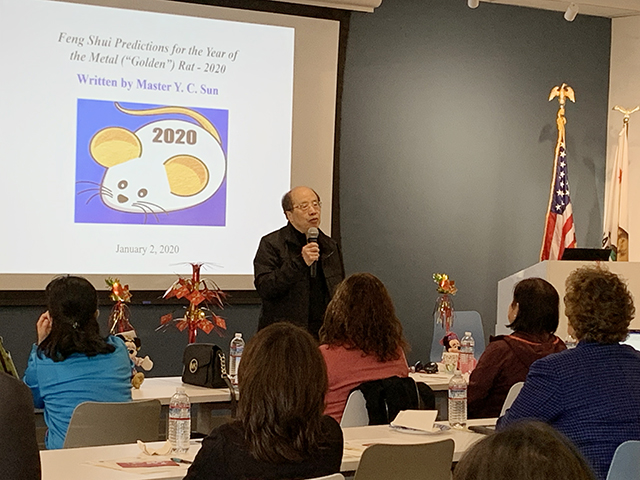
According to the Chinese zodiac, this year is the Year of the Metal Rat and it may be far from a calm year, renowned fortune teller and feng shui master Y.C. Sun told members of the Silicon Valley Association of REALTORS® at their “Lunar New Year Celebration” last week.
Sun said the Metal Rat is intelligent, militant, combative, passionate. The Metal Rat values his family, but can be very aggressive when supporting political and social causes. Expect positive energy this year in the form of fights for justice, economic inequality, standing up to protect one’s own security and interests. Negative energy will come in the form of violent confrontation, riots, more government control, hate crime, domestic violence.
Jobs in demand this year will be artificial intelligence work, software development, data scientist, statistician, health care, nurse, physician, priest, farmer, civil engineer, athlete, lawyer, entertainer, film director.
Beware of health issues caused by the Metal Rat, like lung, flu, sleep disorders, headache, falling, problems in the neck, nose, kidney, large intestine, stroke, respiratory disease, asthma, venereal disease, reproductive system. Bad weather can lead to more floods, landslides, mudslides, avalanches, fires. There will be shipwrecks, air disasters, traffic accidents, gas explosions, chemical fires, earthquakes, tsunamis.
Be careful in June (especially from June 6 through July 6). The feng shui master predicts it will be a disaster-ridden month.
Sun said the economy should finish strong in 2020, with more incoming investment, better trade deals, and solid profits from AI applications, robotics, facial recognition, blockchain technology, and global 5G roll-out activities. Rising wages, low unemployment and interest rates will support demand for homebuying. Millennials will buy their first homes. Except for the East Coast, the real estate market should remain steady with slower price growth. The stock market will fall at the end of the year, but it will also be an opportunity to buy low.
READ MORE HERE
The National Association of REALTORS® (NAR) has been designated by the U.S. Census Bureau as a National Partner for the upcoming 2020 Census. To encourage full participation which will ensure accurate data, NAR is asking its 1.4 million REALTORS® nationwide to help drive Census participation in their respective communities.
In addition to determining appropriate Congressional representation, roughly $1.5 trillion is allocated to states and localities annually based off of Census results – delivering funds for roads, hospitals, schools and countless other public services. More specifically, this year’s results will influence the allocation of $93.5 billion to Federal Direct Student Loans, $19.3 billion to Section 8 Housing Choice Vouchers and $12 billion to the National School Lunch Program.
NAR has also prepared a toolkit for members to help communicate the Census’ importance to their clients, friends and community. The promotional materials emphasize the importance of responding to the 2020 Census and include ways REALTORS® can be involved in the 2020 Census. Also included are template Facebook posts, template tweets, infographics, along with other informational resources provided by the Census Bureau.
Notices about the 2020 Census will be mailed in mid-March. The Census Bureau will offer a guide in roughly 60 different languages.
This year will mark the first time the questionnaire can be completed online, while options to respond over the phone and through the mail will still be available. In addition, NAR is reminding its members and U.S. residents that the Bureau will never ask for bank account or social security numbers, donations or anything on behalf of a political party, and strict federal law protects the confidentiality of Census responses.
The National Association of REALTORS® (NAR) has partnered with Photofy, the content creation app, to create a custom version of the app pre-loaded with “That’s Who We R” social media graphics and videos for REALTORS® to share with consumers. The app is a FREE member-only benefit.
“That’s Who We R” is a campaign launched by NAR last year as a rallying cry that instills pride in a REALTOR®’s everyday actions. The campaign uses the iconic block R logo, representing membership in NAR and differentiates REALTORS® from non-member agents.
The new app boosts the image of the REALTOR® and allows REALTORS® to quickly and easily personalize a selection of content from NAR’s “That’s Who We R” advertising campaign to share on social media, educating consumers about why you, as a REALTOR®, are different from other agents. REALTORS® can add their photo, logo, or contact information and share assets to their social media accounts, all in just a few taps. New content will be added as it becomes available for REALTORS® to share.
REALTORS® may use their NRDS ID to sign up today at Photofy.com/NAR for free access to Photofy’s exclusive toolset for NAR members and start leveraging the national ad campaign on social media.
At the annual National Association of REALTORS® Conference & Expo in San Francisco, NAR’s board of directors voted 729-70 on Monday to approved MLS Statement 8.0, also known as the Clear Cooperation policy. The policy requires listing brokers who are participants in a multiple listing service to submit their listing to the MLS within one business day of marketing the property to the public.
NAR’s MLS Technology and Emerging Issues Advisory Board proposed the policy as a way to address the growing use of off-MLS listings, also known as “pocket listings.” The advisory board concluded that leaving listings outside of the broader marketplace excludes consumers, undermining REALTORS®’ commitment to provide equal opportunity to all. The policy does not prohibit brokers from taking office-exclusive listings; nor does it impede brokers’ ability to meet their clients’ privacy needs.
Following is the full text of MLS Statement 8.0:
Within one (1) business day of marketing a property to the public, the listing broker must submit the listing to the MLS for cooperation with other MLS participants. Public marketing includes, but is not limited to, flyers displayed in windows, yard signs, digital marketing on public facing websites, brokerage website displays (including IDX and VOW), digital communications marketing (email blasts), multi-brokerage listing sharing networks, and applications available to the general public.
MLSs can adopt the policy any time, but they must adopt it no later than May 1, 2020.
Click HERE for more information on the MLS Clear Cooperation Policy
Also at Monday’s meeting, the board of directors approved a change to NAR’s Code of Ethics training requirement and extended the ethics training requirement to every three years instead of every two years. The change was made upon the recommendation of a presidential advisory group in order to give members more time to fit the Code of Ethics training into their continuing education schedule and to give local associations adequate time between cycles to administer the program.
Click HERE for more information on the Code of Ethics training requirement.
The Silicon Valley Association of REALTORS®
(SILVAR) is now located at its new office at 10040 Bubb Rd., Cupertino, CA
95014, just a few miles away from its former office on Stevens Creek Blvd. The
main office contact number remains the same, at (408) 200-0100. Our website
address is also the same at www.silvar.org. Payments
and online registration can continue to be made at http://ims.silvar.org
All classes offered by SILVAR will be located here, unless otherwise stated in
the Education Schedule in the Friday Facts, SILVAR’s weekly member
e-newsletter, or the SILVAR website.
Members are always welcome to stop by the new SILVAR office and say “Hi!”
Buying a home is an exciting experience, but it can also be stressful, especially for first-time homebuyers. Not only do homebuyers need to find out whether they can afford the home of their dreams and qualify for a mortgage, but they also have to make sure the home they purchase is safe for their family.
“As REALTORS® observe REALTOR® Safety Month in September, we want to make sure our clients are safe, too. While REALTORS® take steps to ensure our client’s safety in their home search, it is ultimately up to the buyer to make sure the home they buy is safe and secure for their family,” says Alan Barbic, president of the Silicon Valley Association of REALTORS® (SILVAR).
Below are homebuyer safety tips shared by Barbic and SILVAR:
Find a REALTOR® you can trust
Since you will be working closely with a real estate agent, it’s essential to find someone you can trust, who understands your needs, who is knowledgeable about the transaction process and the area. Remember not all real estate agents are REALTORS®. The term “REALTOR®” is a trademark used by agents who are members of the National Association of REALTORS® and state and local associations like SILVAR. REALTORS® are held to a higher standard of conduct than other real estate licensees. REALTORS® must abide by a Code of Ethics and are committed to treat all parties to a transaction honestly.
Research the neighborhood
A home may look right, but the neighborhood could be wrong. Research neighborhoods in the area where you want to live. This is why it is important to find a REALTOR® familiar with the different neighborhoods in the area. Prioritize your preferences. Even if you don’t have school-age children, nearby schools could affect the value of the home. Check the home’s proximity to amenities like the grocery store, pharmacy, hospital, park, entertainment, police and fire departments. Drive around the neighborhood on different days and times to check street lighting, traffic and activity. Check local crime statistics. Talk to the neighbors and get a feel for the friendliness and safety of the neighborhood.
Attend open houses
At open houses pay close attention to the home’s overall condition, including smells, stains or areas that need repair. If other people are touring the home, schedule a separate visit with your REALTOR® so you can take a closer look at the home and ask questions about the home privately.
Be present at the home inspection
Be present at the home inspection. Make sure the inspector has access to all parts of the home, including the attic and crawl spaces. Ask questions. Review the report with your REALTOR® and list what you would like the seller fix. Be aware if a homebuyer has a question about an issue, it is the responsibility of the homebuyer to investigate further and seek a licensed professional to investigate the particular issue.
Get familiar with the home’s electrical and other systems
Get familiar with the home’s electrical and other systems, including where the meter and electrical circuit box are located. Learn how to shut off the water or gas in case of emergency.
Buy adequate homeowners insurance
Lenders require the homeowner to have homeowners insurance. Shop around and compare rates and coverage. If your new home is in a flood-prone area, you may need to buy separate flood insurance.
Change the Locks
Upon taking possession of your new home consider changing all the door locks and installing deadbolts. You don’t know if other people had been given spare keys to your new home.

Knowledge. Awareness. Empowerment. These are the core components of REALTOR® Safety. To help remind REALTORS® to know the dangers they face every day, to be aware of our surroundings, to empower themselves with precautions and preparations so that they can avoid risky situations, the National Association of REALTORS® dedicates September as REALTOR® Safety Month.
REALTORS® are at risk when they show homes to strangers or meet them at open houses, and even when they put themselves out on the internet and on social media. Through the REALTOR® Safety Program, launched more than a decade ago, NAR makes a variety of resources available to members, including videos, webinars, and marketing materials and presentations for Associations, adding new resources every year.
This year, NAR launched the REALTOR® Safety Network to deploy safety alerts via social media when a physical or cyber threat to REALTORS® warrants national attention. Visit NAR.realtor/safety to learn more and access all of NAR’s REALTOR® Safety resources.
Also new is the just released 2019 Member Safety Report. This report details how REALTORS® feel about their safety and what steps they are already taking to protect themselves.
Some highlights of NAR’s Safety Report are:
- 33 percent of REALTORS® experienced a situation that made them fear for their personal safety or safety of their personal information.
- The typical REALTOR® reported feeling unsafe less than once a year (54%) in terms of personal safety, but unsafe in terms of personal information every few months or more often (61%).
- 5 percent of REALTORS® said they had been a victim of a crime while working as a real estate professional.
- 44 percent of members choose to carry self-defense weapons.
- 35 percent of men and 49% of women carry a self-defense weapon or tool.
- 53 percent of members use a smartphone safety app to track whereabouts and alert colleagues in case of an emergency.
Download NAR’s 2019 Member Safety Report HERE.


 Silicon Valley Association of REALTORS® says ...