
You are currently browsing the category archive for the ‘California Housing Market’ category.
By SILVAR Government Affairs
The Mortgage Interest Deduction (MID) may be under attack again. As the 112th Congress struggles to finalize a budget plan for this year, everything is back on the table. House Speaker John Boehner (R-OH) recently stated that MID for second homes is becoming harder and harder to justify in these difficult times. So might be the MID for homes greater than $500,000.
If these rollbacks to the deduction are put into law, it will be devastating for Silicon Valley homeowners and the overall housing market. But how will it impact you? As part of the National Association of REALTORS® (NAR) Home Ownership Matters campaign, NAR has released an APP that calculates how homeowners do and will benefit for the preservation of the mortgage interest deduction.
The MID Calculator allows homeowners to estimate the tax savings value of the mortgage interest rate deduction. Use the buying power calculator to see how your housing dollars are optimized by the tax savings. This APP is compatible with iPhone, iPod touch, and iPad.
As budget talks heat up, homeowners and REALTORS® should be prepared in the coming weeks to contact their member of Congress to voice their support for preserving the mortgage interest deduction. More information regarding legislative proposals and the deduction can be found at NAR’s MID site.
More than 130 members of the Silicon Valley Association of REALTORS® attended SILVAR’s Los Gatos/Saratoga District tour meeting a few weeks ago and listened as Jacquie Berry, owner of Community Association Data Source, emphasized the greatest mistake any seller can make is an incomplete disclosure.
When dealing with homeowner associations (HOAs), it gets especially complicated because the law requires more disclosures from common interest developments (CIDs), in addition to the normal disclosures required in the sale of single-family homes. Common interest developments are condominiums and planned developments that are governed by a homeowner association which administers the property and is responsible for repairing, replacing, or maintaining the common areas. The homeowner association places restrictions on the use of the property and the common areas.
Berry shared the following statistics: There are over 48,000 homeowner associations in California; CIDs make up a quarter of all housing in the state of California; 49 percent of CIDs are self-managed and less than 25 percent are 100 percent funded in their reserves.
Berry said lenders are asking more questions about the financial health of HOAs so buyers won’t be caught by surprise by undisclosed defects in the common areas and underfunded reserve accounts, which result in special assessments. Agents and prospective buyers should review state laws, documents that HOAs are required to provide, and ask questions. She noted forms change, and homeowner associations rarely provide a complete or updated set of disclosure documents.
Also, HOAs may state they have adequate reserves to maintain deferred maintenance, but they do not specify a timeline for which these reserves are adequate. HOAs must prepare a reserves budget every year, providing a current estimate of the costs of repairing and replacing major common area components over the long-term. Ideally, reserve funds should be able to cover all major repair and replacement costs when needed.
“The value of the property is directly related to reserves,” stressed Berry.
Berry said it’s very important that these disclosures be obtained and reviewed by the appropriate professional so the buyer can make an intelligent decision as to whether or not to purchase the property.
“It’s all about disclosure,” Berry said. “It’s not about anything else but disclosure.”
Not being able to get a home insured can stall, if not kill, a transaction. At this morning’s SILVAR Cupertino/Sunnyvale District tour meeting, an affiliate panel shared information on how to avoid such a dilemma. The panel, moderated by Kyle Chuang (Farmers Insurance), included Walt Rowley (Liberty Mutual Group), Linda Bentson (Old Republic Title), Laura Roseblade and Pauline McDonald (both from State Farm Insurance).
Here are some of many tips the panel shared:
• Each insurance company is different and has its own limitations of coverage, so it’s important to shop around and make sure you are dealing with a true insurance professional who knows the business.
• While there are lenders who may insist that insurance should cover the amount of the loan, insurance companies will only cover the value of the home. The amount an insurance company will cover differs from the appraised value because the appraised value includes land, while home insurance just covers the structure.
• The condition of a house affects insurance coverage more than the age of a house. The following may affect coverage:
– Roof condition – Some companies may deny coverage if an additional layer is placed on top of the original layer.
– Trees and brush in close proximity to the house
– Distance of a fire hydrant or fire station to the house – Some insurance companies will not insure a home if it is more than three miles away from a fire station
– Certain pets
• You have to think in terms of risk. Would you take a risk on a condition that you have observed? Inform you client about a potential problem so it can be fixed right away.
• In the case of condominiums, work closely with the lender. It’s important to know the insurance company that handles the master policy, what the HOA master policy entails, and get a copy of the certification of insurance for the master policy.
• Once you have all insurance documents, get them to your escrow officer as soon a possible.
This week the California Housing Finance Agency announced the full implementation of four programs to help families remain in their homes. The programs, under the umbrella title of Keep Your Home California, are federally funded as part of the U.S. Treasury Department’s Hardest Hit fund, and are aimed at helping low and moderate income homeowners struggling to pay their mortgages. California received a total of nearly $2 billion through the Hardest Hit fund.
All four programs are intended to help avoid foreclosure: three offer several forms of mortgage assistance, as well as a separate program that will provide transition assistance to borrowers who execute a short sale or deed in lieu transaction. All of the programs are designed specifically for low or moderate income homeowners who are either unemployed or are facing another financial hardship, have fallen behind on their mortgages and owe significantly more than the value of their homes.
Specifically, the Keep Your Home California programs provide:
- Mortgage assistance of up to $3,000 per month for unemployed homeowners who are in imminent danger of defaulting on their home loans.
- Funds to help homeowners who have fallen behind on their mortgage payments due to a temporary change in a household circumstance. The program will provide up to $15,000 per household to reinstate mortgages to prevent foreclosures.
- Money to reduce the principal owed on a mortgage for a home where the low or moderate income homeowner is facing a serious financial hardship and owes significantly more than the home is worth. The program requires lenders to match any assistance provided by the Keep Your Home California program.
The programs will be limited to homeowners who meet a number of criteria, including owning and occupying the home as their primary residence, meeting income limits, and facing a financial hardship. Homeowners who consummated a “cash-out” refinance are not eligible for Keep Your Home California programs.
To apply for the assistance, a homeowner should contact the Keep Your Home California call center toll-free at 888.954.KEEP (5337) or their mortgage servicer – the company to which the borrower sends monthly mortgage payments. Each of the mortgage assistance programs requires the participation of the mortgage servicer.
As of February 9, the following servicers are participating in all four Keep Your Home California programs:
- GMAC
- Guild Mortgage
- California Housing Finance Agency
- California Department of Veterans Affairs
Other servicers, including Bank of America, JPMorgan Chase, CitiMortgage and Wells Fargo are currently participating in some, but not all, programs at this time.
Full details regarding programs and servicer participation can be found at http://www.keepyourhomecalifornia.org/.
Over 100 members attended Wednesday’s Los Gatos/Saratoga District meeting and listened to longtime appraiser Roger Miller from Taketa, Miller & Associates. Miller’s message was one of “guarded optimism” regarding 2011, but he is especially positive about this spring.

Appraiser Roger Miller
“Things are starting to turn around,” Miller remarked, and proceeded to share his data.
* At this time last year, there were 95 listings in Los Gatos; as of Tuesday evening, Miller indicated there were 111. A year ago, Saratoga had 73 listings; as of Tuesday night, it had 71.
* Pending sales in Los Gatos at this time last year were 39; they are 43 this year. Saratoga had 20 last year; it has 36 this year.
* 2010 home sales were up in Los Gatos 22 percent from 2009; Monte Sereno, up 42 percent; and Saratoga, up 25 percent.
* Homes priced at two million dollars and under are in a very strong market – 92 percent of last year’s home sales in Los Gatos were under $2 million; Monte Sereno, 65 percent; and Saratoga, 81 percent.
If a listing is under $2 million, if it’s priced right and in the Los Gatos school district, it will sell in one to two months or less. “If your listing is under a million (dollars) in Los Gatos and it hasn’t sold, there’s something wrong,” Miller told REALTORS®.
There is no question prices have dropped, some by as much as 20 percent, and others more, depending on the area. Miller said a home bought at the end of 2007 or at the beginning of 2008 would sell roughly for the same price today.
If there are many foreclosures and REOs in a neighborhood, the market will certainly be affected. This is not much of an issue in the Los Gatos area, according to Miller. There continue to be multiple offers in Silicon Valley – one home just received six offers recently. There are also a number of high-end homes that have sold in the $4 million and above range in Woodside, Atherton and Los Altos Hills.
Miller advised REALTORS® to always do a true history on comps and always check the absorption rate. In Los Gatos, for homes priced between $1 and 2 million, the absorption rate is three months; between $2 to 3 million, seven months; between $3 to 4 million, seven to10 months. In Saratoga, the absorption rate for homes priced under $1 million is one month; between $1 and 2 million, two months; between $2 and 3 million, eight months. Between $3 and 4 million, 5.5 months.
Miller said REALTORS® should NOT have to deal with out-of-town appraisers, unless the report is co-signed by an appraiser who knows the area. Speak with the bank manager; it is important to know the bank you are dealing with, he stressed.
There’s more optimism in the air, according to Miller. Here are some signs:
*Stocks have improved.
* The unemployment rate has gone down a bit – the unemployment rate in the San Jose-Sunnyvale-Santa Clara MSA was 10.7 percent in December 2010, down from a revised 10.9 percent in November 2010, and below the year-ago estimate of 11.5 percent, according to the Employment Development Department.
* Google is hiring 6,000 new employees nationwide and 2,000 locally.
* Heavier traffic these days points to more activity and more people being employed.
“Everything is starting to turn,” Miller repeated.
Miller, who is well-known for his expertise in the business, said he is very confident that the housing market in the region will do well this spring. But time is of essence. He told REALTORS® if they have sellers who are sitting on the fence, “tell them to get their house on the market now, within the next two weeks.”
There’s an optimism in the air. It’s quite evident in attendance at the different SILVAR district meetings. It’s also evident in the attitudes and points of view of the various speakers at each of SILVAR’s districts.

Left to right: Chris Trapani (Sereno Group), John Thompson (Intero Real Estate), Bill Lewis (Alain Pinel Realtors) and Fred Hibbert (Coldwell Banker)
The first 2011 Los Altos/Mountain View District tour meeting took place last Friday with a good attendance and a broker/manager panel, which included Chris Trapani (Sereno Group), John Thompson (Intero Real Estate), Bill Lewis (Alain Pinel Realtors) and Fred Hibbert (Coldwell Banker). 2011 District Chair Denise Welsh, who served as moderator, asked the brokers to share their greatest challenges, advice to agents for positioning buyers (and sellers) in 2011, and valuable traits they look for in an agent.
For Fred Hibbert, the greatest challenge is managing expectations of buyers and sellers.
Bill Lewis said it’s staying on top of the market. “Success is preparation and opportunity. You need to know the market,” he stressed.
John Thompson said knowledge and skills in the industry are important. An agent needs to be objective and focus on what he/she should improve.
Chris Trapani said it’s important for him as a manager to see growth in his office. His goal is to have his agents succeed. He especially wants to coach agents who have not yet experienced levels of success and guide them to a place of stability.
What is the panel’s advice to agents for 2011? Hibbert advised agents to study the information, be knowledgeable about the market, and know the stats.
“Stats are important and talking points are important,” confirmed Lewis. Armed with this knowledge, Lewis said agents can discuss real estate and show their knowledge to everyone, even while waiting in line in the supermarket.
“Have patience,” Lewis added. “You have to understand your clients and help your clients understand the market and manage their expectations.”
Thompson said there’s no excuse for agents to be operating without stats. Agents have access to the data and need to be able to explain the short and long-term impact on value in the different neighborhoods.
As for valuable traits the managers look for in an agent, Trapani said he looks at the agent’s track record, and most of all, he looks for a “culture fit” in his company.
Thompson looks for intangibles, especially personality. “If a person knows what they want to get out of this business, I can help them with a business plan. They have to know what they want,” Thompson stressed.
Lewis looks for a high level of honesty, integrity and fair dealing in an agent. It’s his foundation to building a culture in the office. The agent would need to get along with others in the office.
Hibbert wants the agent to have a game plan and goals.
A red flag to these managers is when the agent immediately wants to know what the deal is, and does not express much interest in the company’s philosophy.
The brokers are very optimistic about 2011. Enjoy the ride, be prepared, focus on what you want, but you have to work. Get out there, get the inventory, get the listings, they said.
The 2011 leadership team of the Silicon Valley Association of REALTORS® (SILVAR) was installed Jan. 13 at the Menlo Circus Club in Atherton. California Association of REALTORS® President-elect LeFrancis Arnold administered the oath of office to 2011 SILVAR President E. H. “Gene” Lentz. The Honorable Quentin Kopp administered the oath of office to the local trade association’s 2011 officers and Board of Directors.

California Association of REALTORS® President-elect LeFrancis Arnold administered the oath of office to 2011 SILVAR President E. H. “Gene” Lentz. Lentz is a REALTOR® with Red Hawk Real Estate in Menlo Park.
In addition to Gene Lentz, a REALTOR® with Red Hawk Real Estate in Menlo Park, SILVAR’s 2011 officers include Suzanne Yost, a REALTOR® with Alain Pinel Realtors in Los Gatos, President-elect; and Phyllis Carmichael, a REALTOR® with Coldwell Banker in Los Altos, Treasurer.
The 2011 Board of Directors includes Jeff Bell (Coldwell Banker), Past President; Julia Truesdale Keady (Alain Pinel Realtors), Region 9 Chair; Bill Moody (Referral Realty), Cupertino/Sunnyvale District Chair; Denise Welsh (Intero Real Estate Services), Los Altos/Mountain View District Chair; Doug Evans (Coldwell Banker), Los Gatos/Saratoga District Chair; Penelope Huang (RE/MAX Distinctive Properties), Menlo Park/Atherton District Chair; Nancy Macleod (Homes2Buy.com), Palo Alto District Chair; Judy Ellis (Alain Pinel Realtors), National Association of REALTORS® Director; Alicia Nuzzo (Sereno Group), At-large; Dave Tonna (Alain Pinel Realtors), At-large; Carolyn Miller (RE/MAX Real Estate Services), At-large; Bill Rehbock (Coldwell Banker), At-large; Bryan Robertson (Sereno Group), At-large; and Jimmy Kang (Wells Fargo Home Mortgage), Affiliate Chair.

The Honorable Quentin Kopp administered the oath of office to SILVAR's 2011 officers and Board of Directors.
Lentz has worked in real estate for 15 years and is highly regarded for his intimate knowledge of his community and strong work ethic. An active member of the local trade association, Lentz has served as Menlo Park District Chair (2007), Political Action Committee Chair (2006, 2007), Menlo Park District Local Government Relations Committee Chair (2002-2009), and a member of the Menlo Park Citizens Budget Advisory Committee (FY 2005-2006). Lentz is also a member of the California Association of REALTORS® (Director 2007, 2008) and National Association of REALTORS®.
The 2010 Appreciation Awards were also presented by 2010 President Jeff Bell and Executive Officer Paul Cardus to Nina Yamaguchi (Coldwell Banker), REALTOR® of the Year; Chris Grammar (Allied Brokers Insurance), Affiliate of the Year; and Lisa Keith (Red Hawk Real Estate), Spirit of SILVAR. Past president Leannah Hunt (Coldwell Banker) was recognized for her work as 2010 Region 9 Chair.

Leannah Hunt, 2010 Region 9 Chair
Gerry Lawrence (Coldwell Banker), SILVAR’s treasurer for the past seven years, and longtime board director and past president John Tripp (Foundation Trust) were presented the special President’s award by Bell for their valuable guidance and assistance during his term of office and their continued contributions to the association.
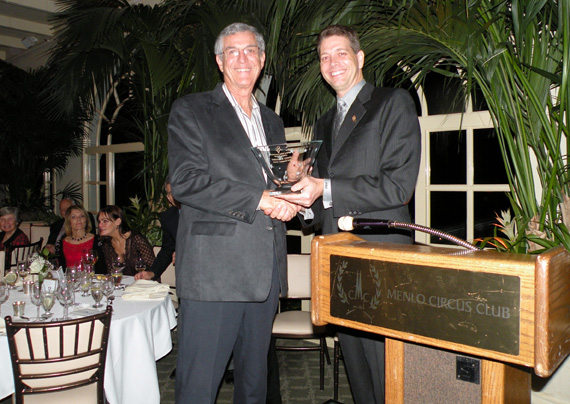
Gerry Lawrence, 2010 President's Award recipient
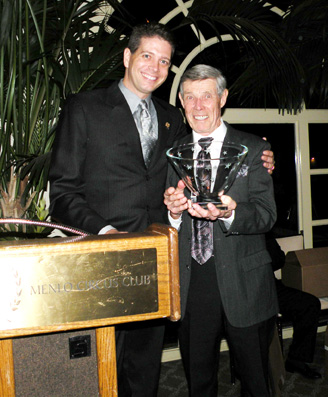
John Tripp, 2010 President's Award recipient
Bell noted 2010 REALTOR® of the Year Nina Yamaguchi was instrumental in branding the “Silicon Valley Association of REALTORS®.” Yamaguchi chairs the Silicon Valley REALTORS® Charitable Foundation Scholarship Program, which has provided nearly $200,000 to 198 graduating seniors, since she established the program 11 years ago.

Nina Yamaguchi, 2010 REALTOR® of the Year
“By her leadership and example, she inspires us professionally and personally to be the best we can be and look beyond our successes and give back to others,” Bell said.
Bell commended 2010 Affiliate of the Year Chris Grammar for his generosity with his sponsorship support and being instrumental in coordinating and preparing tour sponsorships for several districts.
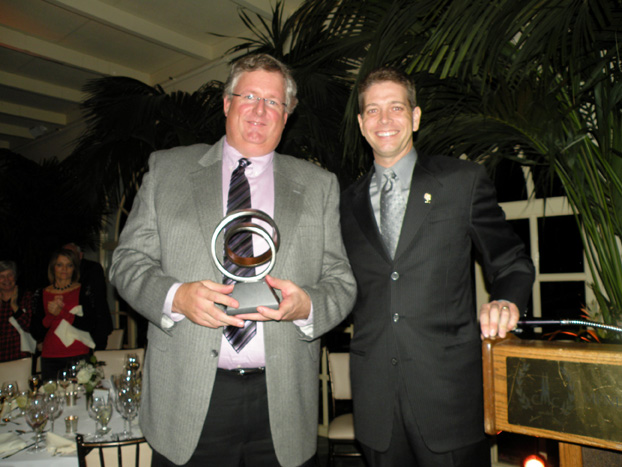
Chris Grammar, 2010 Affiliate of the Year
2010 Spirit of SILVAR recipient Lisa Keith was honored for her kindness and generosity, having supported the Charitable Foundation Trust as the annual golf and dinner/auction’s lead sponsor for two years in a row, serving as its inspiring chair and working tirelessly to make the 2010 fundraiser a success.
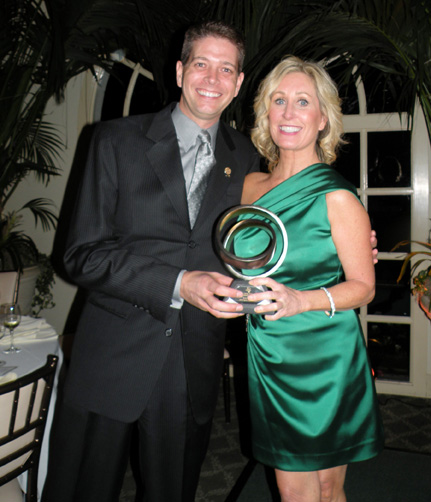
Lisa Keith, 2010 Spirit of SILVAR Award recipient
This year’s Installation Sponsors included SILVAR’s Menlo Park/Atherton District, MLSListings Inc., Supra, Wells Fargo Home Mortgage – Palo Alto, Alain Pinel Realtors – Los Gatos, Sereno Group, Steve Papapietro with Bank of America Home Loans and Keller Williams Realty – Palo Alto.

Thank you 2011 Installation Sponsors
Sales in November picked up from the previous month in the state of California and nationwide. This is a sign that the market is recovering on its own, according to REALTOR® officials.
The California Association of REALTORS® reported last week that California home sales rose in November, though down from the previous year. Closed escrow sales of existing, single-family detached homes in California totaled 490,950 in November, according to information collected by C.A.R. from more than 90 local REALTOR® associations statewide. Sales were up 9.2 percent from October’s revised pace of 449,480, but down 8.6 percent from November 2009.
The statewide median price declined from both the previous month and previous year. The November 2010 median price was $296,820, down 2.4 percent from October’s $304,220 median price and down 2.5 percent from the revised $304,550 median price in November 2009.
Santa Clara County home sales rose 6 percent in November from that of the previous month, but were down 8.6 percent from November 2009. The November median sales price of a single-family detached home was $589,980, down 7.5 percent from October when it was $637,750, and down 2.5 percent from November 2009, when it was $605,000.
“Sales last year were spurred by the government home buyer tax credit program,” said Jeff Bell, president of the Silicon Valley Association of REALTORS®. “We are now seeing market gains, without help from the stimulus program, and this is a positive sign.”
The Silicon Valley cities of Saratoga, Los Gatos and Cupertino continued to rank among the top 10 cities with the highest median home price during November 2010. Saratoga’s median home price in November was $1,235,000; Los Gatos, $850,000; and Cupertino, $850,000.
The National Association of REALTORS® also reported last week that November’s existing-home sales (completed transactions that include single-family, townhomes, condominiums and co-ops) rose 5.6 percent to 4.68 million from 4.43 million in October, but are 27.9 percent from November 2009. The national median existing-home price for all housing types was $170,600 in November, up 0.4 percent from November 2009. Distressed homes accounted for 33 percent of November sales.
“Continuing gains in home sales are encouraging, and the positive impact of steady job creation will more than trump some negative impact from a modest rise in mortgage interest rates, which remain historically favorable,” says NAR chief economist Lawrence Yun.
Yun says the relationship between mortgage interest rates, home prices and family income continues to be the most favorable on record for buying a home since NAR started measuring in 1970.
Congress has passed a bill which President Obama signed into law today that will extend the expiring Bush tax rates and a host of other expired or expiring provisions.
In addition to extending the Bush tax rates through the end of 2012, the measure covers the following:
- Retains the 15% capital gains rate
- Two point self-employment tax reduction (for both employer and employee portions of tax)
- Reinstates the estate tax and the stepped-up basis rules
- Expands the estate tax exclusion to $5 million
- Lower estate tax rates (Maximum 35%)
- 15-year recovery periods for leasehold improvements
- Enhanced expensing for some assets
- Energy tax credits
- Alternative Minimum Tax relief
“Housing affordability has never been better, but the high unemployment rate, slow job growth and difficulty in obtaining credit, especially for high-cost homes, continue to be stumbling blocks to a complete housing recovery,” according to Jeff Bell, president of the Silicon Valley Association of REALTORS®.
Uneven Recovery, but Sales Clearly “Off Bottom”
The National Association of REALTORS® reports today that sales of existing homes in October declined 2.2 percent to a 4.43 million annual rate from 4.53 million in September. The national median existing-home price for all housing types was $170,500, down 0.9 percent from October 2009.
NAR chief economist Lawrence Yun said the recent sales pattern can be expected to continue, but he believes sales will steadily improve to healthier levels of above 5 million by spring of next year. “The housing market is experiencing an uneven recovery, and a temporary foreclosure stoppage in some states is likely to have held back a number of completed sales. Still, sales activity is clearly off the bottom and is attempting to settle into normal sustainable levels,” he said.
Overly tight credit is making it difficult for some creditworthy borrowers to qualify for a mortgage. “A return to common sense loan underwriting standards would go a long way toward achieving responsible, sustainable homeownership,” said NAR President Ron Phipps.
Home Builder Confidence Up, but Obtaining Credit Is a Problem
Home builders are also complaining that tight credit is getting in their way. Nationwide housing starts declined 11.7 percent to an annual rate of 519,000 units in October. Despite the decline, the National Association of Home Builders reports builder confidence is up slightly, as builders are starting to report some improvement in buyer demand and quality of buyer traffic.
“The great concern is that this positive momentum will be stifled due to builders’ inability to obtain financing for new construction at a time when inventories of completed new homes are very thin,” NAHB Chief Economist David Crowe said in a press release.
In addition to tight credit, worry continues about the high unemployment rate, slow job growth and looming shadow inventory. Distressed homes accounted for 34 percent of sales in October, according to NAR. There’s also the threat of foreclosures mounting as a growing amount of homeowners remain out of work and those who have borrowed against their equity default on their mortgage.
GDP Growth Better Than Anticipated
On the upside, the Commerce Department reports the economy grew at a 2.5 percent annual rate in the third quarter, more than previously calculated, due to increased shipments abroad and business spending for equipment and software.
Santa Clara County October Median Up Slightly
Although October home sales fell, Santa Clara County saw a slight year-over-year gain in its October median home price. According to a California Association of REALTORS® report released today, the October median price for a single-family home in Santa Clara County was $637,750, was up 8 percent from the same time a year ago. October sales of single-family detached homes in the county were down 24 percent from October 2009, when the first-time home buyer credits was available.
C.A.R. reports DataQuick statistics, which are based on county records data rather than MLS information, ranked the Silicon Valley cities of Los Altos, Palo Alto, Cupertino and Los Gatos among the top 10 cities with the highest median home prices in California during October 2010. The October median home price in Los Altos was $1,700,000; Palo Alto, $1,050,000; Cupertino, $1,022,500; and Los Gatos, $1,000,000.


 Silicon Valley Association of REALTORS® says ...